
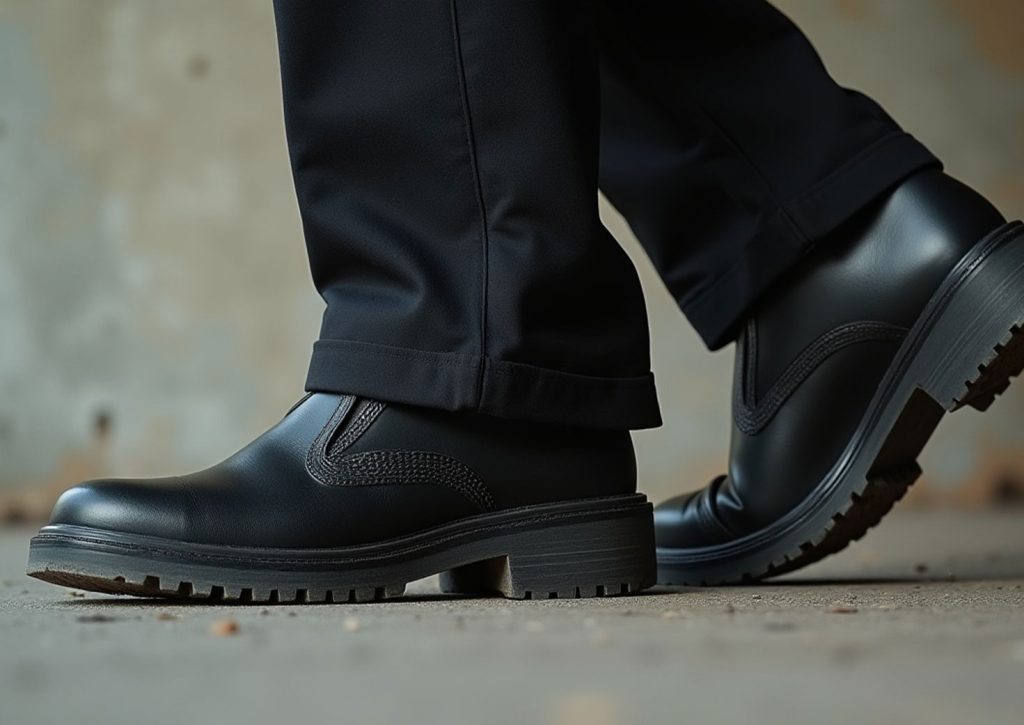
Selecting the right safety shoes requires more than choosing the most recognisable brand or the lowest price. For workers in construction, manufacturing, chemical processing, or any industrial environment, appropriate footwear is a functional safety requirement. This guide outlines the ten key factors to evaluate before purchasing safety shoes — for individual buyers and procurement teams alike.
1. Identify Workplace Hazards First
Before evaluating any product, conduct a hazard assessment of your work environment. Are workers exposed to falling objects, sharp debris, chemical spills, electrical risks, or slippery floors? The hazard profile determines which features — steel toe, chemical resistance, anti-static sole, waterproofing — are non-negotiable.
2. Material and Build Quality
Look for footwear made from durable, industry-grade materials. Full-grain leather and buff leather uppers offer longevity and resistance to abrasion. PU soles — particularly double-density construction — provide superior shock absorption and wear resistance compared to standard PVC.
3. Toe Protection Type
Steel toe caps are the standard choice for heavy-duty environments. Composite toe caps are lighter and preferable where electrical hazards are present. Aluminium toe caps offer a middle ground — lighter than steel but heavier than composite. Match the toe protection type to your specific application.
4. Slip Resistance
Slip-related accidents are among the most common causes of workplace injury. Look for soles rated SRA (ceramic tile), SRB (steel floor with oil), or SRC (both), as per EN ISO standards. Anti-skid outsoles are essential in wet, oily, or dusty environments.
5. Comfort and Ergonomic Fit
Ill-fitting footwear reduces worker productivity and increases fatigue. Look for padded insoles, arch support, breathable lining (such as Cambrelle synthetic), and appropriate ankle design for the nature of work. Where possible, workers should try footwear before bulk procurement is finalised.
6. Waterproofing and Environmental Protection
In wet or outdoor environments — construction sites, agricultural operations, chemical plants — waterproof footwear is essential. Insulated designs are required where workers are exposed to cold or extreme temperature conditions.
7. Weight and Mobility
Heavy footwear accelerates fatigue, particularly on extended shifts. Lightweight PU construction offers comparable protection to heavier alternatives while reducing strain on the wearer. For roles requiring frequent movement or climbing, weight is a significant consideration.
8. Safety Certification
Always verify that footwear carries relevant certifications. In India, BIS certification under IS 15298 Part 2 is the primary benchmark. Internationally, EN ISO 20345 and ASTM F2413 are the key references. Do not rely solely on supplier claims — ask for certification documentation.
9. Durability and Maintenance
Footwear that is difficult to clean or deteriorates quickly in harsh conditions increases replacement costs. Choose materials suitable for the cleaning methods used on-site, and assess the expected service life under actual working conditions before committing to a large purchase.
10. Supplier Reliability and After-Sales Support
A supplier’s reputation and support capability are as important as the product itself. Choose a supplier who offers warranty coverage, reliable bulk supply, consistent quality across batches, and responsive after-sales service. Mittal Safety Works has built its reputation on exactly these principles, serving industrial clients across India with a wide range of certified safety footwear. View our complete range at Mittal Safety Works Shop.
In Summary
Purchasing safety footwear is a decision that directly affects worker well-being and regulatory compliance. By evaluating these ten factors — hazard profile, material quality, toe protection, slip resistance, comfort, waterproofing, weight, certification, durability, and supplier reliability — procurement teams can make informed, defensible decisions that serve their workforce well over the long term.
Why the Right Specification Matters More Than the Right Price
Safety footwear procurement decisions in Indian industry are too often driven primarily by price. This creates a predictable outcome: footwear that meets the minimum budget criteria but fails to meet the actual hazard profile of the workplace, wears out faster than anticipated, or — most seriously — fails at the moment of impact. The ten factors below provide a framework for making specification-first, cost-informed decisions.
The Ten Factors — Expanded
1. BIS IS:15298 Certification
This is the non-negotiable starting point. Any safety footwear used in an Indian industrial environment must carry current BIS IS:15298 certification. Verify the licence number at bis.gov.in before purchase. Do not accept copies of certificates without independent verification.
2. Hazard Matching
IS:15298 sets the minimum standard — but the minimum is not always sufficient. Chemical processing zones require chemical-resistant PVC. Steel plant furnace areas require heat-resistant soles. Cold stores require insulated footwear. Map your hazards before selecting a model.
3. Sole Material for Your Floor
PU soles perform better on dry concrete, abrasive floors, and long-standing environments. PVC soles perform better in wet, chemical, and waterlogged environments. Double-density PU extends life in abrasive environments. Match the sole compound to your floor surface and chemical exposure.
4. Slip Resistance Rating
SRB rating (the IS:15298 standard) requires a minimum coefficient of friction of 0.28 on wet ceramic tile. For environments with oily metal floors, SRC rating (adding a glycerol on steel test) is more relevant. Confirm the slip resistance rating appropriate to your floor type.
5. Correct Sizing for Your Workforce
Safety footwear that does not fit is either not worn or is worn incorrectly, reducing its protective effectiveness. Measure your workforce — do not order on assumed sizes. Include sizes 5 to 7 if your workforce includes women workers.
6. Weight and Comfort for Shift Duration
A worker on a 12-hour standing shift experiences significantly more fatigue in heavy footwear than in lightweight PU. For long shifts, cushioning specification is as important as protection specification. The Jumbo Z+ PU is specifically designed for extended-shift comfort.
7. Durability for Your Environment
Service life varies significantly by environment. A PU shoe lasting 18 months in a dry office-adjacent area will last 6-8 months in a steel fabrication shop. Factor replacement frequency into your total cost calculation, not just unit cost.
8. Replacement Cycle Planning
Define your replacement triggers before you purchase. Tread depth, sole separation, toe box integrity — these are objective criteria that eliminate the guesswork of “is this shoe still okay?”
9. Documentation for Compliance
Your footwear specification decision creates a documentation requirement: BIS licence on file, issue register per worker, replacement records. Factor the documentation process into your procurement design.
10. Supplier Reliability
A supplier who can deliver the same model, in full sizes, within a predictable lead time, is worth more than the cheapest price from an unreliable source. Safety footwear stock-outs mid-year create compliance gaps and operational disruption.
Related Reading
- IS:15298 Explained
- PU vs PVC — Full Comparison
- How to Identify Fake Safety Shoes
- Safety Shoe Replacement Schedule