
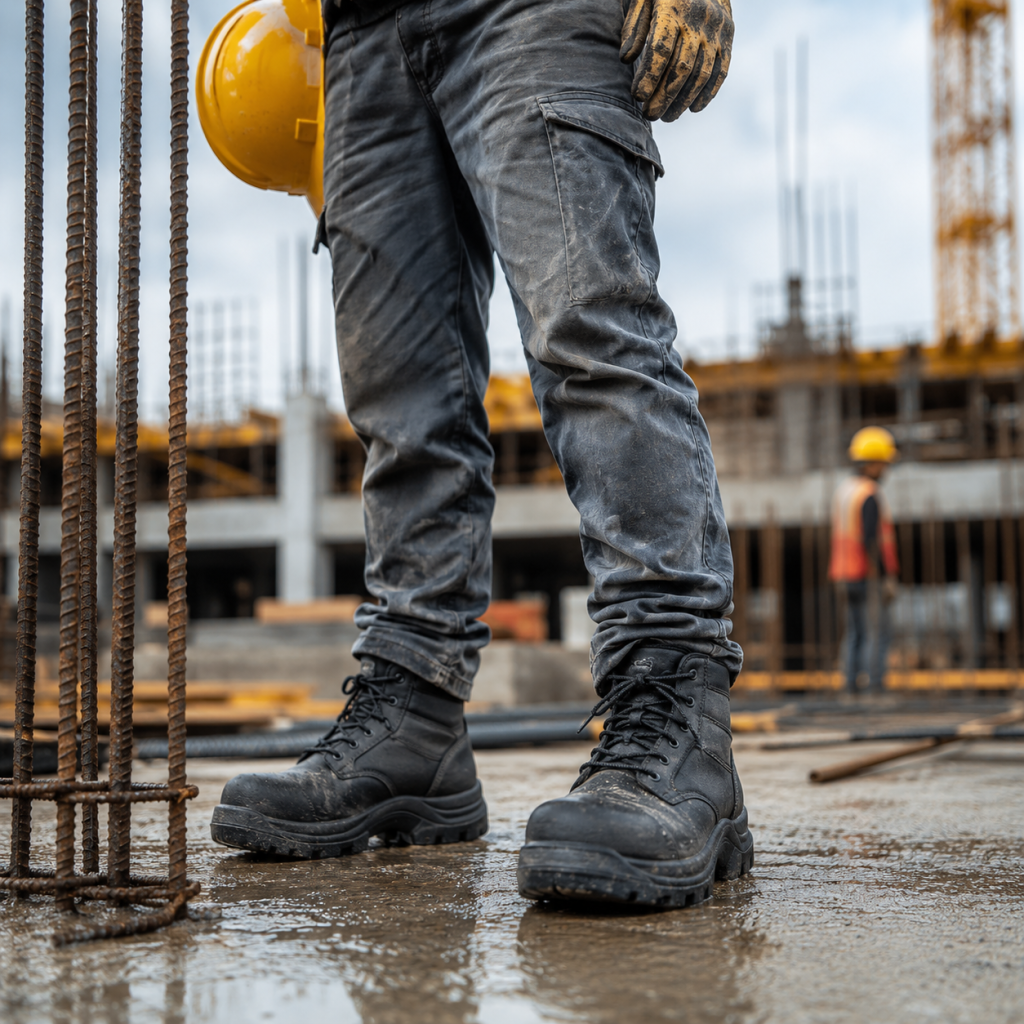
Construction is consistently among the highest-risk industries for occupational injury in India. The Building and Other Construction Workers (Regulation of Employment and Conditions of Service) Act, 1996 specifically addresses the duty of employers to provide appropriate PPE — and safety footwear is central to that obligation. Yet on many Indian sites, footwear compliance remains inconsistent, incomplete, or based on price rather than hazard specification.
This guide maps the specific hazards of Indian construction environments by zone, identifies the correct footwear for each, and provides practical guidance for contractors, safety officers, and procurement managers.
Why Construction Is Different from Other Industries
Most industrial workplaces have defined, stable hazard zones that can be engineered and controlled. Construction is inherently different — the hazard profile changes every week as the project progresses. Foundation work presents entirely different risks from structural steel erection, which presents different risks from finishing trades. A specification that is correct in Month 1 may be inadequate by Month 6.
Additionally, Indian construction sites routinely mix hazard types simultaneously — workers are exposed to falling objects, sharp debris, wet concrete, chemical (cement, paints, sealants), electrical risk, and during monsoon, severe waterlogging — often in the same shift.
Zone-by-Zone Hazard and Footwear Mapping
| Construction Phase / Zone | Primary Hazards | Recommended Footwear |
|---|---|---|
| Excavation and foundation | Sharp rubble, reinforcement bars, waterlogging, soil hazards | Steel toe PVC gumboot — Jungle Boot PVC |
| Structural concrete work | Falling formwork, cement alkalinity, slippery wet surfaces | Steel toe PU with slip-resistant sole — Hawk PU |
| Steel structure erection | Falling steel, sharp edges, height work | Steel toe with ankle support — Rock PU or Rock DD PU |
| Masonry and blockwork | Heavy block impact, abrasive surfaces, alkaline mortar | Steel toe with penetration-resistant midsole |
| Roofing and waterproofing | Chemical exposure, slip, height | Anti-slip PVC safety shoe |
| Electrical and MEP works | Electrical hazard, confined spaces | Non-conductive safety shoe |
| Finishing and tiling | Adhesive chemical exposure, sharp tile edges | Chemical-resistant PVC |
| Outdoor site during monsoon | Waterlogging, mud, slip, contamination | Full PVC gumboot — mandatory |
IS:15298 Requirements for Construction
All safety footwear used on construction sites must be certified to BIS IS:15298 Part 2. This standard specifies a minimum 200-joule impact resistance and 15kN compression resistance for the toe cap — sufficient for standard construction falling objects and compression from machinery. For foundation and outdoor work, the BIS IS:15298 requirement is the minimum; many specifications also require penetration resistance and water resistance.
Monsoon Season on Construction Sites
The Indian monsoon transforms construction sites more dramatically than any other industrial environment. Foundation trenches flood, concrete pours are delayed, scaffold boards become treacherously slippery, and workers are exposed simultaneously to waterlogging and electrical risk from temporary connections.
Pre-monsoon planning for construction sites should include:
- Audit all current footwear — replace any PU shoes used in outdoor zones with PVC for the monsoon season
- Ensure all foundation and outdoor workers have adequate gumboots — ankle height is insufficient for waterlogged trenches
- Inspect anti-slip ratings — monsoon conditions require SRB (Slip Resistance B) rated footwear at minimum
- Increase inspection frequency — construction footwear in outdoor monsoon conditions wears significantly faster than normal
Contractor Procurement — Practical Guidance
Construction contractors typically manage footwear procurement across a workforce that changes in composition as trades rotate on and off site. This creates a procurement planning challenge. The most practical approach is:
- Set a site standard — define one or two approved models for each phase of work rather than accepting workers' own footwear
- Build size inventory — hold a buffer of sizes 6–12 on site; workers who cannot get their size will not wear incorrect footwear safely
- Log every issue — maintain a simple register of who received what and when; this is your BOCW compliance record
- Set replacement triggers — define inspection checkpoints at contract milestone stages, not just at calendar intervals
Related Reading
- PU vs PVC Safety Shoes — Which Does Your Industry Need?
- PVC Gumboots for Industrial Use in India
- Anti-Slip Safety Shoes — Why Slip Resistance Is Undervalued
- IS:15298 — The Indian Standard for Safety Footwear
- Monsoon Season Safety Footwear Guide