
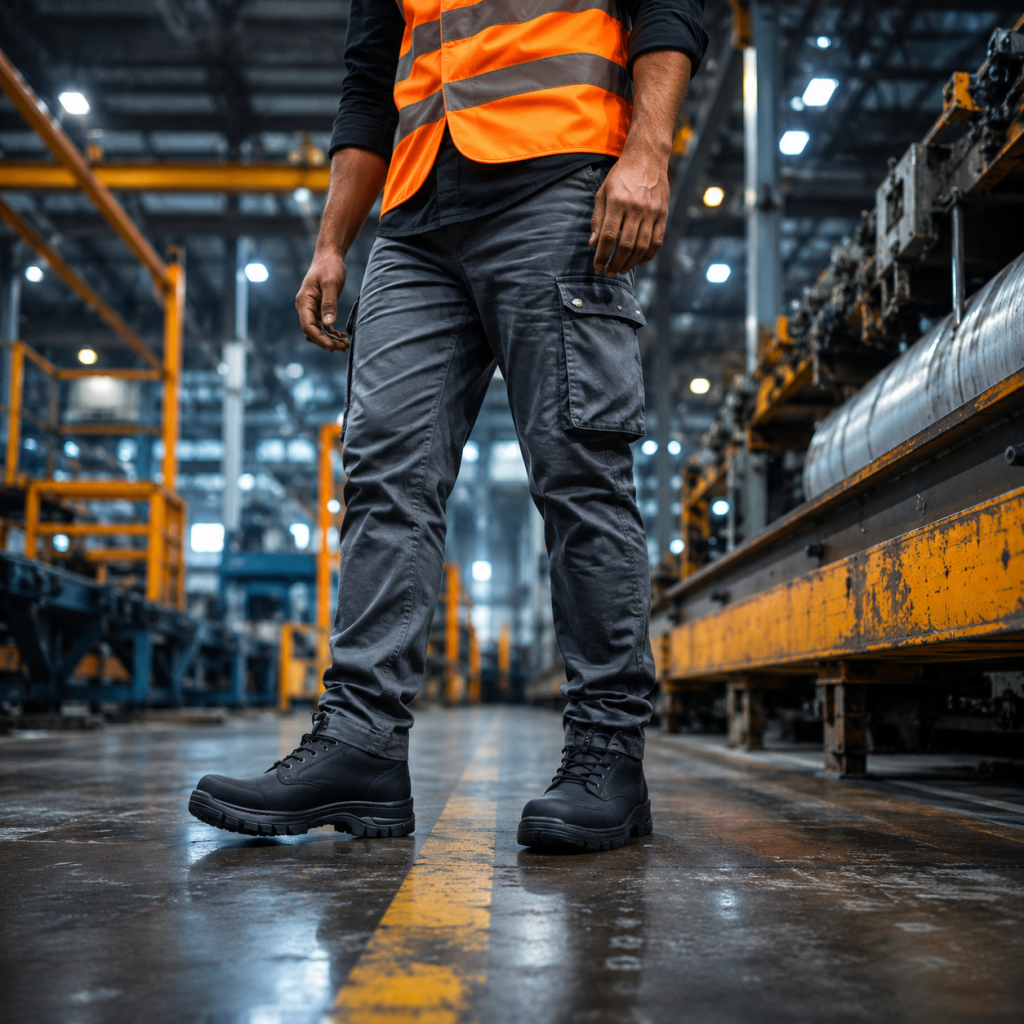
In the hierarchy of personal protective equipment, safety shoes rarely get the attention they deserve. Hard hats, high-visibility vests, and respiratory protection occupy most of the conversation in occupational safety. Footwear, which is in contact with the workplace hazard every single step of the working day, is often specified as an afterthought — and purchased accordingly.
This is a significant oversight. The feet and lower legs are among the most vulnerable parts of the body in industrial environments, and foot injuries — particularly crush injuries, fractures, and chemical burns — are among the most debilitating in terms of recovery time and long-term impact on a worker's ability to work.
The Scale of the Problem
According to data from the Labour Bureau and occupational health studies conducted across Indian industrial sectors, foot and lower leg injuries account for a substantial proportion of non-fatal workplace injuries in manufacturing, construction, and logistics. Many of these occur in environments where safety footwear was available but either not specified correctly, not enforced consistently, or replaced infrequently enough to have deteriorated below an effective protective standard.
What Safety Shoes Actually Do
A well-specified pair of safety shoes performs several functions simultaneously:
- Impact protection — the steel or composite toe cap absorbs energy from falling objects before it reaches the foot
- Compression resistance — prevents the toe box from collapsing under load (vehicle tyres, heavy equipment)
- Penetration resistance — a midsole plate prevents sharp objects from puncturing through the sole
- Slip resistance — the outsole compound and tread pattern provide grip on the specific floor surface and contaminant
- Chemical protection — the upper and sole material resists absorption of oils, acids, and alkalis
- Electrical protection — in appropriate specifications, the sole provides either electrical insulation or static dissipation
The Cost of Not Investing
A workplace foot injury typically results in 20–90 days of lost work depending on severity. For a company, this means wages paid without work performed, potential replacement labour costs, loss of a skilled worker's productivity, possible compliance consequences, and increased insurance premiums. The cost of a quality pair of safety shoes — even at premium specification — is a small fraction of the cost of one preventable foot injury.
The Indcare Range from Mittal Safety Works
Mittal Safety Works manufactures the Indcare range of safety footwear from our facility in Mangolpuri, Delhi. Our range covers the full spectrum of industrial safety shoe requirements:
- PU Safety Shoes — for manufacturing, engineering, and logistics environments. Models include the Hawk PU, Rock PU, and Jumbo Z+ PU.
- PVC Safety Shoes — for wet, chemical, and hygiene-sensitive environments. Models include Polo PVC and Hector PVC.
- PVC Gumboots — for standing water, chemical flooding, and outdoor environments. Includes the Jungle Boot PVC.
All Indcare footwear meets BIS IS:15298 specifications and is manufactured under our ISO 9001:2015 quality management system. Full certification documentation is available for procurement and vendor qualification purposes.
For Safety Managers and Procurement Teams
If you are responsible for footwear specification across a large workforce, we can support your procurement process with product samples, size-wise bulk quotes, compliance documentation, and guidance on selecting the right model for your specific hazard environment. Contact us or request a quote today.
The Hierarchy of PPE in Indian Industry
In the standard PPE hierarchy, head protection (helmet) and eye protection (goggles) receive the highest visibility — literally and figuratively. Hand protection receives significant attention in industries with cutting and chemical hazard. But foot protection — the PPE that supports every worker through every shift, on every floor surface, in every weather condition — is frequently the most under-specified and most under-resourced category in the PPE budget.
This is a misallocation. Foot injuries are the third most common workplace injury category in Indian manufacturing, after hand injuries and musculoskeletal disorders. Slip, trip and fall accounts for a disproportionate share of non-fatal injuries. The cost of a single foot injury — medical treatment, worker compensation, lost productivity, administrative overhead — regularly exceeds the annual footwear cost for the entire affected shift.
Why Workers Resist Safety Footwear — And How to Address It
Workers who resist wearing safety footwear consistently give three reasons: it is too heavy, it does not fit, or it makes their feet hurt after a few hours. These are not complaints about safety compliance — they are feedback about specification quality. A safety shoe that is correctly specified, correctly sized, and of appropriate quality is worn without complaint.
The response to footwear non-compliance in most organisations is enforcement. The more effective response is specification review. Workers who understand what their footwear protects them from, and who wear footwear that fits and is comfortable for their shift duration, are naturally more compliant than workers who are simply told to wear it.
The Documentation Argument for Safety Shoes
For management teams who need a financial justification for investing in quality safety footwear, the argument is straightforward. Under the Employees Compensation Act 2010, an employer whose worker is injured in an environment where PPE should have been provided — but was not, or was inadequate — faces uncapped compensation liability. A documented safety footwear programme (IS:15298 certified products, issue register, replacement records) is the primary evidence of reasonable care. The cost of this programme is a fraction of one significant compensation claim.
Related Reading
- Why Safety Shoes Are Essential in Every Industrial Workplace
- Top Workplace Hazards That Safety Shoes Protect You From
- Industrial Safety Culture — PPE as Last Line of Defence
- Safety Shoe Buying Guide