
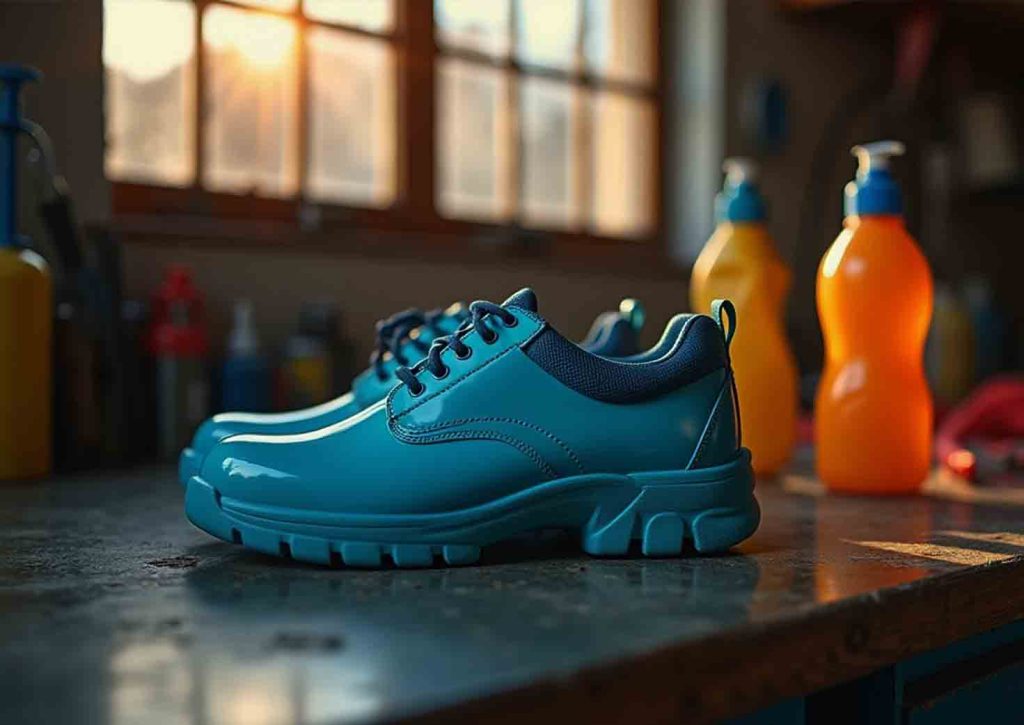
In any industrial operation, the conversation around safety usually centres on helmets, gloves, and protective clothing. Foot protection, despite being equally important, is often treated as an afterthought — until an injury occurs. The reality is that the feet bear the full weight of a worker’s body across every shift, on some of the most hazardous surfaces in any workplace. Choosing the right safety footwear is not a compliance exercise. It is a genuine commitment to the people doing the work.
Protection Against the Hazards That Are Always Present
Industrial environments contain hazards that would be unacceptable in any other setting — heavy machinery, falling tools, sharp materials underfoot, slippery surfaces coated with oil or chemical residue. Workers navigate these conditions every day, and ordinary footwear offers no meaningful protection against them.
A pair of certified safety shoes changes this equation substantially. Reinforced toe caps — built to withstand impacts of 200 joules under IS 15298 Part 2 — protect against crush injuries from falling and rolling objects. Puncture-resistant midsoles prevent nails and sharp debris from penetrating through to the foot. The difference between wearing and not wearing safety shoes in these environments is the difference between a near-miss and a serious injury.
Slip Prevention: The Most Underestimated Feature
Slips and falls are responsible for a disproportionate share of workplace injuries — not just foot injuries, but knee, back, and head injuries from the fall itself. Industrial floors are rarely dry and clean. Water, oil, grease, chemical spills, and loose particulates all reduce traction and increase the risk of slipping.
Anti-slip soles, engineered with specific tread patterns and compounds, significantly improve grip on wet and contaminated surfaces. For workers in food processing, chemical plants, warehouses, and construction environments, this single feature can prevent a disproportionate number of the accidents that occur each year.
Specialised Protection for Higher-Risk Roles
Beyond the baseline protection every safety shoe provides, specific roles require specific features.
Electricians and maintenance workers dealing with live systems need footwear with electrical hazard (EH) insulation. Workers in pharmaceutical and electronics manufacturing need anti-static properties to prevent discharge that could damage sensitive components or ignite flammable materials. Chemical plant workers need sole materials that resist degradation from acids, alkalis, and solvents. Workers in foundries and welding units need heat-resistant soles that maintain integrity at high surface temperatures.
Safety footwear designed for these applications is not a premium indulgence — it is the minimum standard of care for workers in these environments.
Comfort Over Long Shifts
A worker who is uncomfortable in their footwear is a safety risk. Foot pain, blisters, and fatigue all reduce concentration — and reduced concentration leads to errors, near-misses, and eventually injuries. This is one reason why modern safety footwear design pays close attention to ergonomics.
Cushioned insoles, breathable linings such as Cambrelle synthetic, adequate toe room, and lightweight sole constructions all contribute to a shoe that workers will actually want to wear for a full shift. When the shoe does its job without the worker noticing it, that is good design.
The Indcare range at Mittal Safety Works is designed with precisely this in mind — certified protection that workers do not have to sacrifice comfort to wear.
Compliance and the Culture It Reflects
Many industries in India are subject to occupational health and safety regulations that mandate the use of appropriate PPE, including safety footwear. BIS certification under IS 15298 is the standard that procurement managers should look for when sourcing for domestic operations.
But compliance is a floor, not a ceiling. Organisations that treat safety footwear as a genuine priority — providing well-fitted, quality shoes rather than the cheapest available option — send a clear signal to their workforce: your safety matters. This builds the kind of safety culture where workers look out for each other, near-misses get reported, and the systemic improvements that prevent injuries actually happen.
Safety Footwear as a Long-Term Investment
A workplace injury costs far more than the price difference between a cheap pair of shoes and a quality certified pair. There are direct costs — medical treatment, lost productivity, potential compensation. And there are indirect costs — investigation time, management distraction, the impact on team morale when a colleague is injured.
Quality safety footwear from a certified manufacturer reduces all of these costs. It lasts longer, performs more reliably, and keeps workers protected across the conditions they actually face. For organisations serious about safety, it is not a cost to be minimised — it is an investment to be made wisely.
Mittal Safety Works manufactures and supplies Indcare safety footwear — ISI certified, CE compliant, and purpose-built for Indian industrial environments. View our full range or request a bulk quote from our team.