
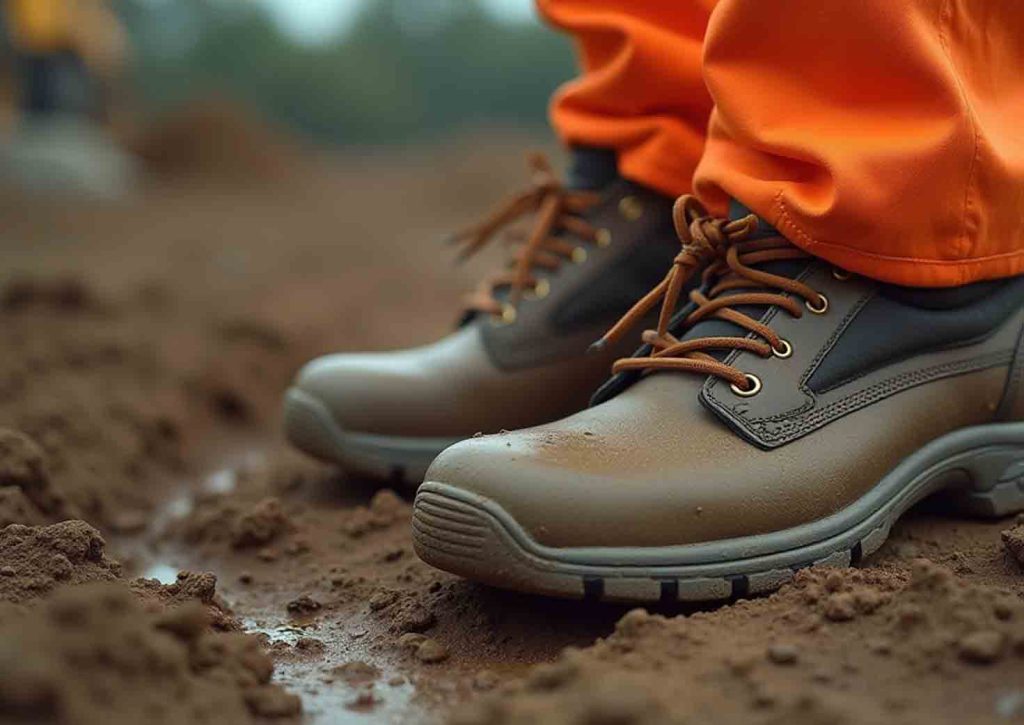
Foot injuries are among the most common — and most preventable — workplace accidents across India’s industrial sectors. Construction sites, manufacturing floors, chemical plants, warehouses, and logistics hubs all present hazards that ordinary footwear simply cannot handle. Understanding these risks is the first step towards choosing the right protective equipment for your workforce.
1. Falling and Rolling Objects
In warehouses, fabrication units, and construction sites, heavy tools, machinery components, and building materials frequently fall or roll. A single incident — a dropped wrench, a shifted pallet, or a rolling pipe — can cause fractures, crush injuries, or permanent damage to the foot.
Safety shoes with reinforced steel, alloy, or composite toe caps are designed to absorb and distribute the energy of such impacts, protecting the toes and forefoot from crushing injuries. The toe cap rating (typically 200 joules for certified footwear) defines the level of protection it provides.
2. Sharp Objects and Puncture Hazards
Nails, metal shards, broken glass, wire, and other sharp debris are a constant presence on construction sites and in industrial facilities. Ordinary shoes provide no meaningful protection against these hazards — a nail can penetrate through a standard sole in a fraction of a second.
Safety shoes with puncture-resistant midsoles — constructed from steel plate, Kevlar, or composite materials — create a barrier that prevents sharp objects from reaching the foot. This feature is particularly critical for workers in civil construction, demolition, and scrap handling environments.
3. Slips, Trips, and Falls
Wet floors, oil spills, chemical residue, loose sand, and uneven terrain make slips and falls one of the leading causes of workplace injuries in India. These accidents can result not just in foot injuries, but in back injuries, fractures, and head trauma from the fall itself.
Anti-slip soles — rated according to SRA (ceramic tile with soap solution), SRB (steel floor with oil), or the combined SRC standard — provide significantly better traction than standard footwear. For workers in processing plants, kitchens, and wet industrial environments, this is a non-negotiable feature.
4. Electrical Hazards
Workers in electrical installation, maintenance, and manufacturing roles face daily exposure to live electrical systems and static discharge. Standard footwear offers no protection against these risks.
Electrical hazard (EH) rated safety shoes provide insulation that reduces the risk of electric shocks from accidental contact with live circuits. Anti-static (AS) footwear, on the other hand, helps safely dissipate static electricity — essential in electronics manufacturing, pharmaceutical units, and environments where static discharge could damage sensitive equipment or ignite flammable substances.
5. Chemical Exposure
Workers in chemical processing plants, laboratories, textile dyeing units, and food processing facilities regularly encounter acids, alkalis, solvents, and other substances that can cause chemical burns or skin damage. Ordinary footwear is quickly degraded by chemical exposure and offers no meaningful protection to the skin underneath.
Chemical-resistant safety shoes and gumboots are manufactured with specialised materials — typically PVC or treated rubber — that resist penetration by a wide range of chemicals, keeping the foot protected even in direct contact situations.
6. Heat and Hot Surfaces
Foundries, welding stations, metal fabrication plants, and glass manufacturing facilities expose workers to extreme heat — from hot floors and surfaces to sparks and molten material splashes. Standard soles melt or deform under these conditions, creating both safety and hygiene risks.
Heat-resistant safety shoes feature soles specifically compounded to withstand high surface temperatures, protecting workers from burns and ensuring the footwear maintains its structural integrity throughout a shift.
7. Compression and Crushing Hazards
Forklifts, pallet jacks, industrial trolleys, and heavy machinery operating in tight spaces create significant crushing risks. A forklift wheel running over an unprotected foot can cause catastrophic injuries.
Quality safety footwear is engineered to withstand substantial compression forces. The metatarsal protection variant — which extends the protective cover to the upper foot — is specifically designed for environments with the highest crushing risk.
8. Ankle Injuries and Long-Shift Fatigue
Extended hours of standing, walking on uneven surfaces, or carrying heavy loads places significant strain on feet and ankles. Fatigue increases the risk of missteps, particularly towards the end of a shift when concentration is lower.
Well-designed safety shoes address this through cushioned insoles, ergonomic footbed design, and — in high-ankle variants — added support that reduces the risk of sprains and twists. Workers who are comfortable are more alert, more productive, and less likely to make the kind of small errors that lead to accidents.
Choosing the Right Protection for Your Industry
No single safety shoe addresses every hazard equally. The right approach is to match the shoe specification to the dominant risks in your specific work environment. At Indcare by Mittal Safety Works, our range covers the full spectrum — from steel-toe PU safety shoes for construction and manufacturing, to PVC gumboots for chemical and wet environments, to lightweight knitted-fabric safety shoes for logistics and assembly roles.
If you are sourcing safety footwear for an industrial workforce, request a quote and our team will help you identify the right specification for your requirements.