
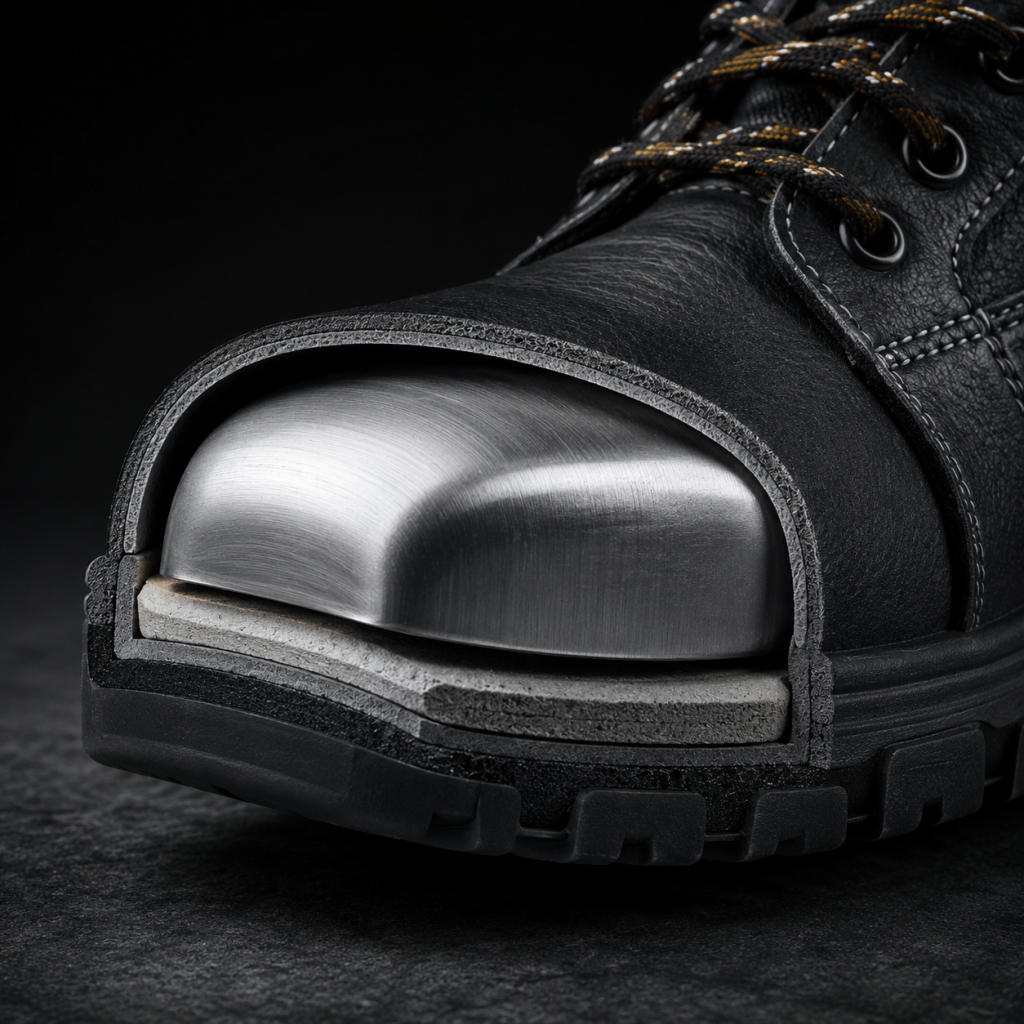
Both steel toe and composite toe caps can be certified to IS:15298. Both provide 200J impact resistance and 15kN compression protection. But they differ in ways that matter for certain applications.
Performance Comparison
| Parameter | Steel Toe | Composite Toe |
|---|---|---|
| IS:15298 compliance | Yes (when certified) | Yes (when certified) |
| Weight | Standard | 30–50% lighter |
| Temperature conductivity | Conducts heat and cold | Thermal insulator |
| Metal detection | Triggers detectors | Non-metallic — passes through |
| Electrical conductivity | Conducts | Non-conductive |
| Cost | Lower | 30–50% higher |
When to Specify Each
Specify steel toe (standard Indcare range) when:
- Primary concern is cost-effective IS:15298 compliance
- Working environment is at moderate temperatures
- Metal detection is not a requirement
- Procuring in bulk for a large workforce
Consider composite toe when:
- Workers operate near furnaces, high-heat processes, or cold storage
- Metal detection is used at your facility
- Significant fatigue reduction benefit from lighter shoe is a specific objective
- Budget allows for additional per-pair cost
For most Indian manufacturing, construction, logistics, and general industrial procurement, steel toe caps in the Indcare range represent the right and cost-effective choice. If you have specific composite toe requirements, contact our team to discuss sourcing options.
Request a Bulk Quote Browse the Range →
How Steel and Composite Toe Caps Are Made
A steel toe cap is a formed steel shell pressed to shape from cold-rolled steel sheet, typically 1.2–1.5mm thick, with a specific geometry that distributes impact load across the widest area of the toe cap. The IS:15298 test regime drops a standardised weight onto the cap and measures whether the internal clearance remains intact — confirming the cap has absorbed the energy without deforming inward enough to injure the toes beneath.
A composite toe cap uses non-metallic materials — typically carbon fibre, Kevlar (aramid fibre), fibreglass, or thermoplastic composites — to create a cap with similar geometry but different material properties. The cap is typically thicker than steel to achieve the same structural strength, which can make the toe box slightly wider.
The Metal Detection Issue in Indian Industry
Metal detection at factory entry points is standard in food processing, pharmaceutical, and some electronics manufacturing facilities in India. Standard steel toe safety shoes trigger metal detectors. There are two responses to this: either remove and re-enter with footwear at detector points (creating a compliance gap and practical inconvenience), or specify composite toe footwear for workers in those zones.
For most Indian manufacturing and construction, metal detection is not a concern, and steel toe remains the correct, cost-effective specification. For pharmaceutical and food processing workers who pass through metal detection multiple times per shift, composite toe eliminates a real operational friction.
Temperature Performance
Steel conducts heat and cold. In a foundry or near a furnace, a steel toe cap can transfer heat to the toes — not sufficient to cause burns in most industrial contact scenarios, but noticeable in prolonged proximity to hot surfaces. In cold storage environments operating below -10°C, steel conducts cold to the toes, reducing circulation and comfort over long shifts.
Composite materials are thermal insulators. For workers in extreme temperature environments — furnace proximity zones or deep cold stores — composite toe specification addresses a real comfort and safety issue that steel toe does not. However, for the vast majority of Indian manufacturing environments operating at ambient temperatures, the difference is not material.
Total Cost Comparison Over 18 Months
| Factor | Steel Toe (Indcare Range) | Composite Toe |
|---|---|---|
| Typical unit cost | Base reference | 30–50% higher per pair |
| Service life (manufacturing) | 12–18 months | Similar |
| Repair/resoling availability | Widely available | Limited specialist repair |
| BIS IS:15298 certification | Available on all Indcare models | Available from specialist manufacturers |
| Indian market availability | Widely available from domestic manufacturers | Limited — primarily import dependent |
| For 100 workers, 18-month cost | Lower total cost | Significantly higher total cost |
Related Reading
- IS:15298 Explained — What the Standard Tests
- PU vs PVC Safety Shoes — Full Comparison
- Safety Shoes for Food Processing — Metal Detection Requirements
- Safety Shoe Buying Guide for Procurement Managers